Full Revelations of a Professional Brushologist
A BRIEF ABSTRACT: Detailing the pedagogical offerings of the Fellow Brushologists—providing expert instruction, Open Source hardware schemas, and practical workshops in Mechatronic Arts to discerning academies, scholars, and FabLabs.
To arrange an engagement, or to inquire regarding reasonable terms for our services, direct all correspondence to: marc@dusseiller.ch
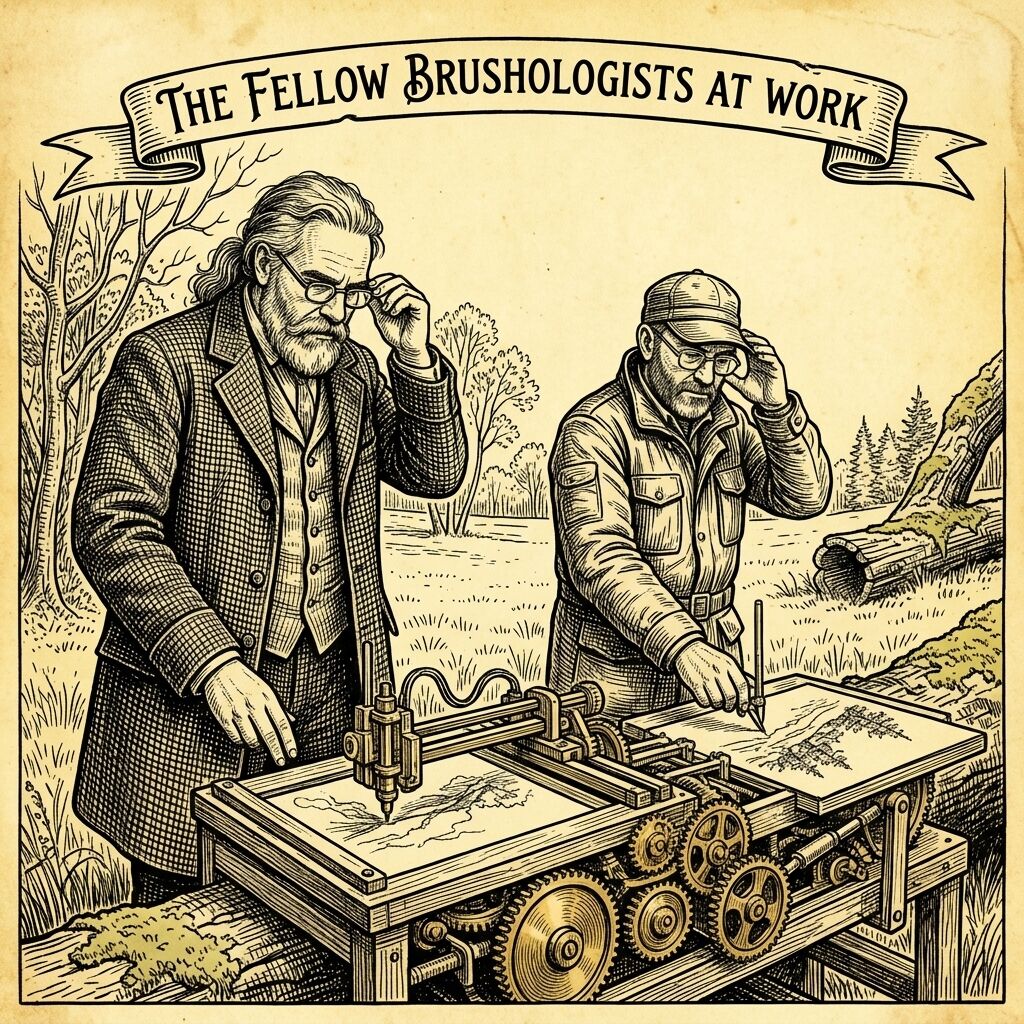
In placing before my readers the results of our extensive experience in Mechatronic Tinkering, G-Code Assembly, and the Taming of the Wild Brush, I must first acknowledge that the genesis of this entire endeavor springs from the visionary work of Dominik Mahnič. He laid the foundational stones of this mechatronic art, and it was only later that I entered the collaboration to assist in the capture of the perfect Brushograph. I may say that I have always done my best to accomplish every workshop task that I have undertaken. We have, in consequence, received excellent testimonials from many Art Academies, Design Schools, and FabLabs.
I have not only made it my study to discover the best methods of capturing a digital image upon a canvas, but I have also taken great interest in watching the ways and habits of the Stepper Motor and the Microcontroller. I have come to the conclusion that there is no sure way of completely mastering these Machines without proper, disciplined instruction.
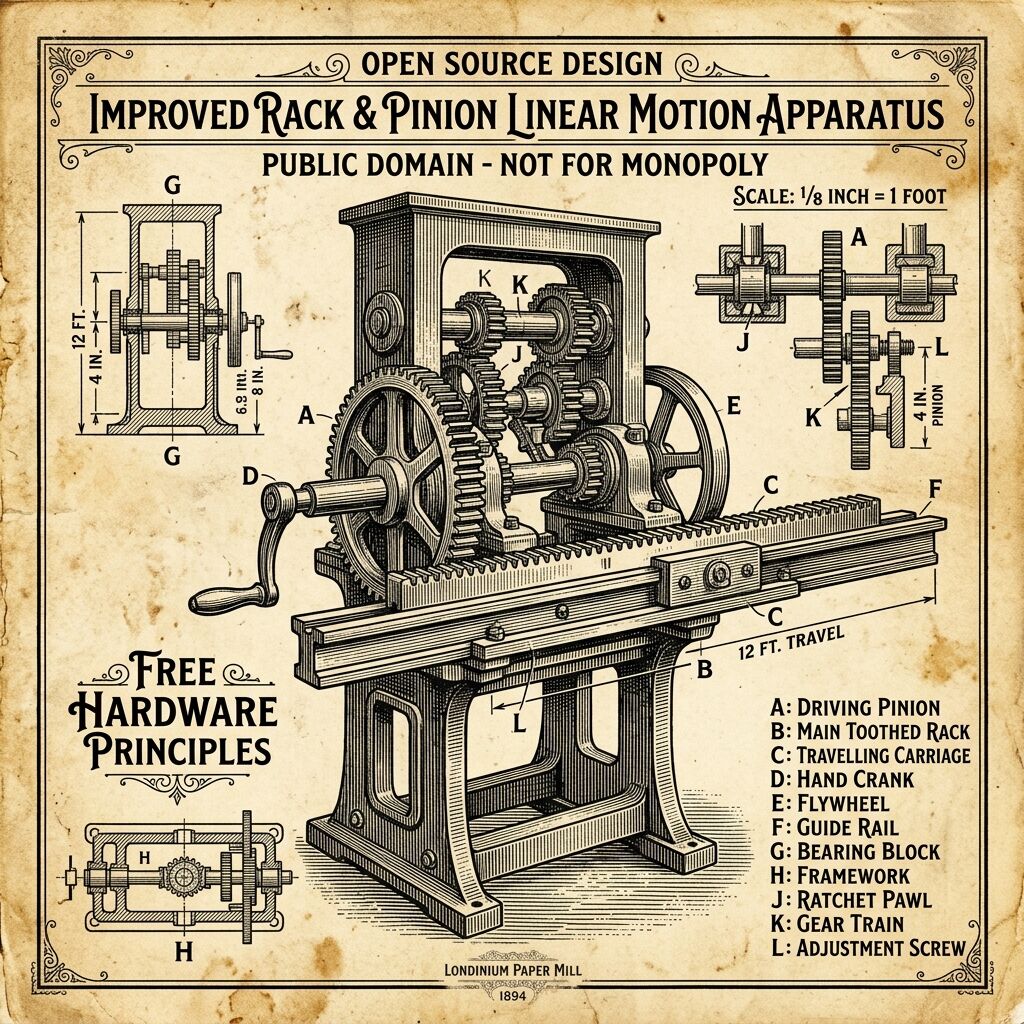
It is for this reason I title this tract Full Revelations. In the true spirit of Open Source hardware and software, I hold no secrets back from the public. The schemas, the firmware, and the physical mechanisms of our machines are laid completely bare for all to study, modify, and improve upon, just as an honest tradesman shares the tools of his craft without gatekeeping or locked black-boxes.
In doing so, we proudly place ourselves within the long, storied tradition of Swiss anarchists and horological artisans—such as the creators of the magnificent Jaquet-Droz automata. Just as those early watchmakers combined intricate mechanics with radical philosophy, we seek to liberate the art of automation from closed systems, putting the power of the machine back into the hands of the people.
PART I. THE LIFE OF A BRUSHOLOGIST
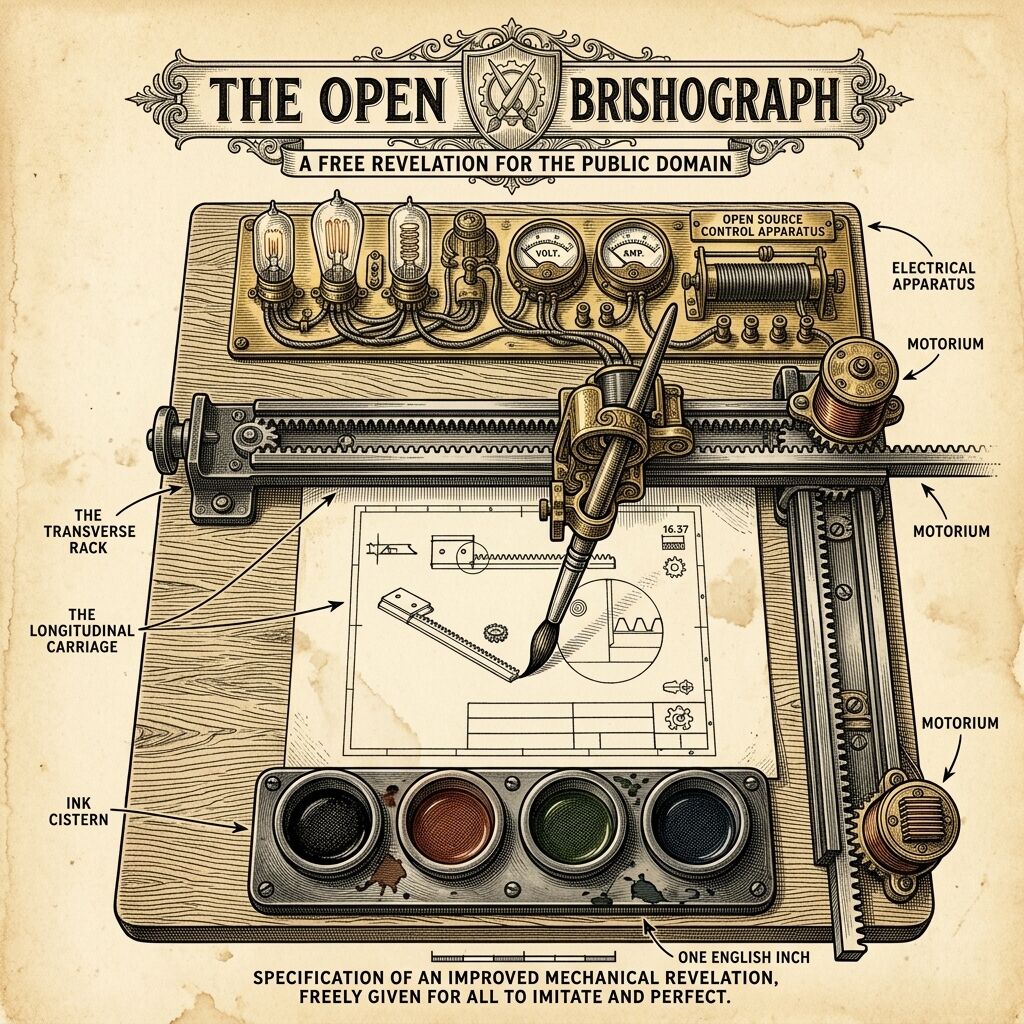
This work will not be complete if I do not deal with the Brushologist’s life. The profession is a peculiar and exciting one, but all right if pursued in the right way. Although the calling takes one into dirty and obnoxious places—often finding oneself covered in stray solder flux, tangled dupont wires, and rogue splashes of Indian Ink—there is no reason why the Brushologist should not always appear respectable.
Of course, there are inconveniences that the Brushologist has to put up with. On one occasion, when going round with my open laptop to examine the G-code streams in the dark of a school's basement, I was taken for a network hacker by the security guard, and he doubted me so much that he would not release me until I had shown him my Brushograph with the Steppers running and my SVG files set all over the place. Then he took almost as much interest in the drawing of concentric circles as myself.
I can assure my readers that the Brushologist is well remunerated by the sheer joy of the Scholars when they first see a machine of their own making drag ink across a canvas. This, I can assure my readers, makes all the "roughing it" worthwhile.
PART II. ENGAGING THE SCHOLARS
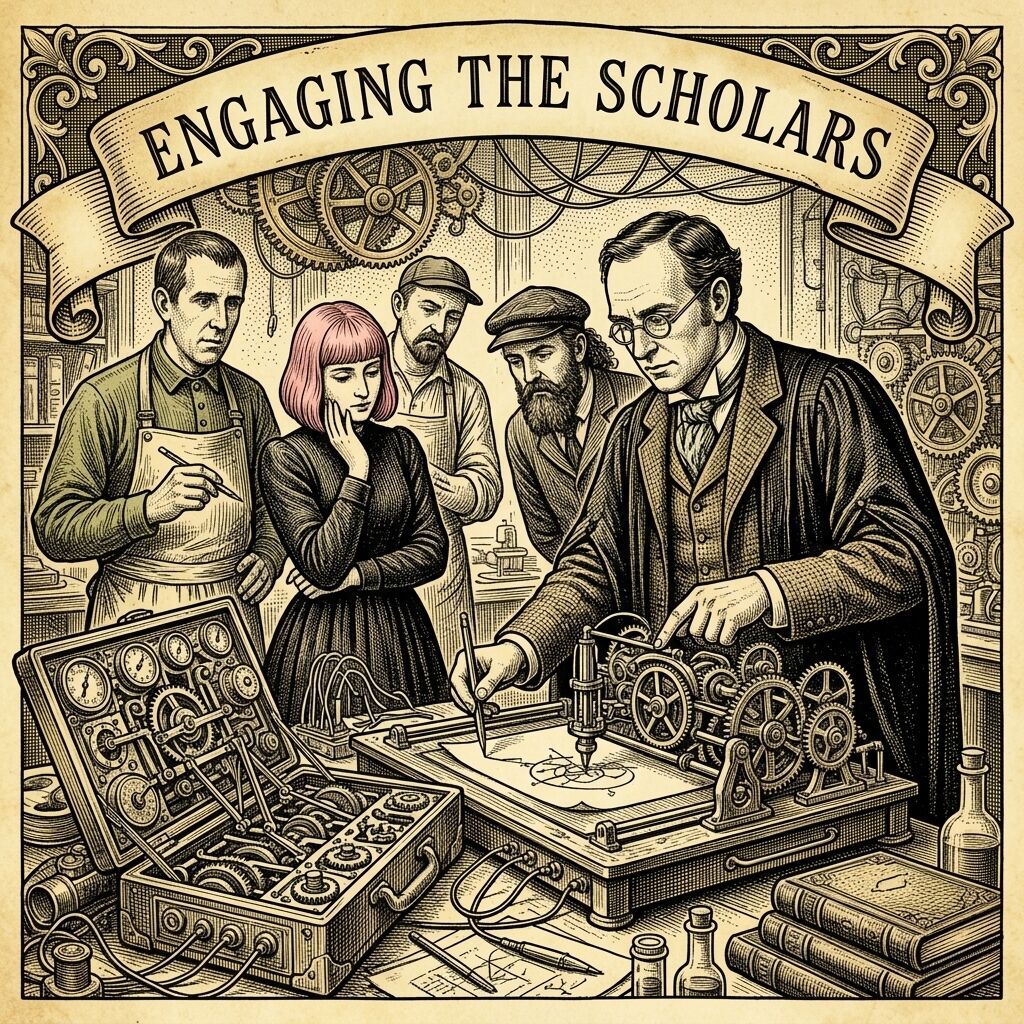
In the first place, my advice is—never introduce a student to a CNC Machine without first letting them feel the Brush. Why? Simply because the G-Codes that you generate are but numbers, and you can depend upon it that the student who only looks at a screen will not understand the physical drag of the Ink, and the consequence is that the resulting artwork will be most obnoxious.
To teach your students to trap and organize these codes, we provide our fully open-source Brushograph Studio App and G-Code Archive. Here, the student learns to hunt the wild algorithms, trapping them safely in the browser without the need for cumbersome installations.
PART III. HISTORIC MYTHS & COLONIAL ORIGINS
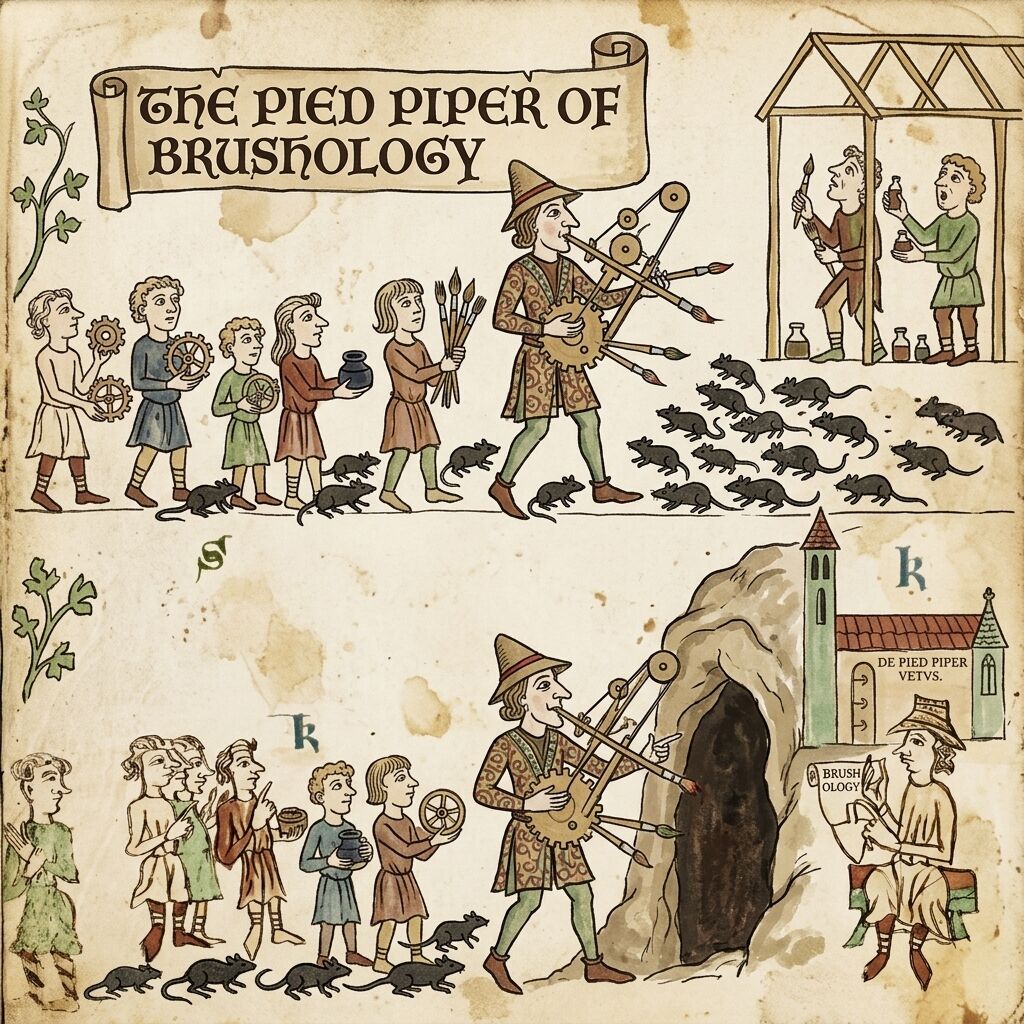
The lineage of our craft reaches far back into the shadowy recesses of antiquity, long before the modern Stepper Motor was ever wound. In the Middle Ages, the primitive mechanical arts of early Brushology were jealously guarded by secretive guilds. Such esoteric knowledge naturally gave rise to folklore—the most famous being the myth of the Pied Piper of Hamelin. Unbeknownst to the uninitiated, the Piper did not wield a magic flute; rather, he possessed an early, rudimentary Brushograph mechanism. Through the rhythmic, mesmerizing whir of wooden gears and the precise application of ink, he commanded both beasts and spellbound apprentices alike, leaving a trail of algorithmic wonder in his wake.
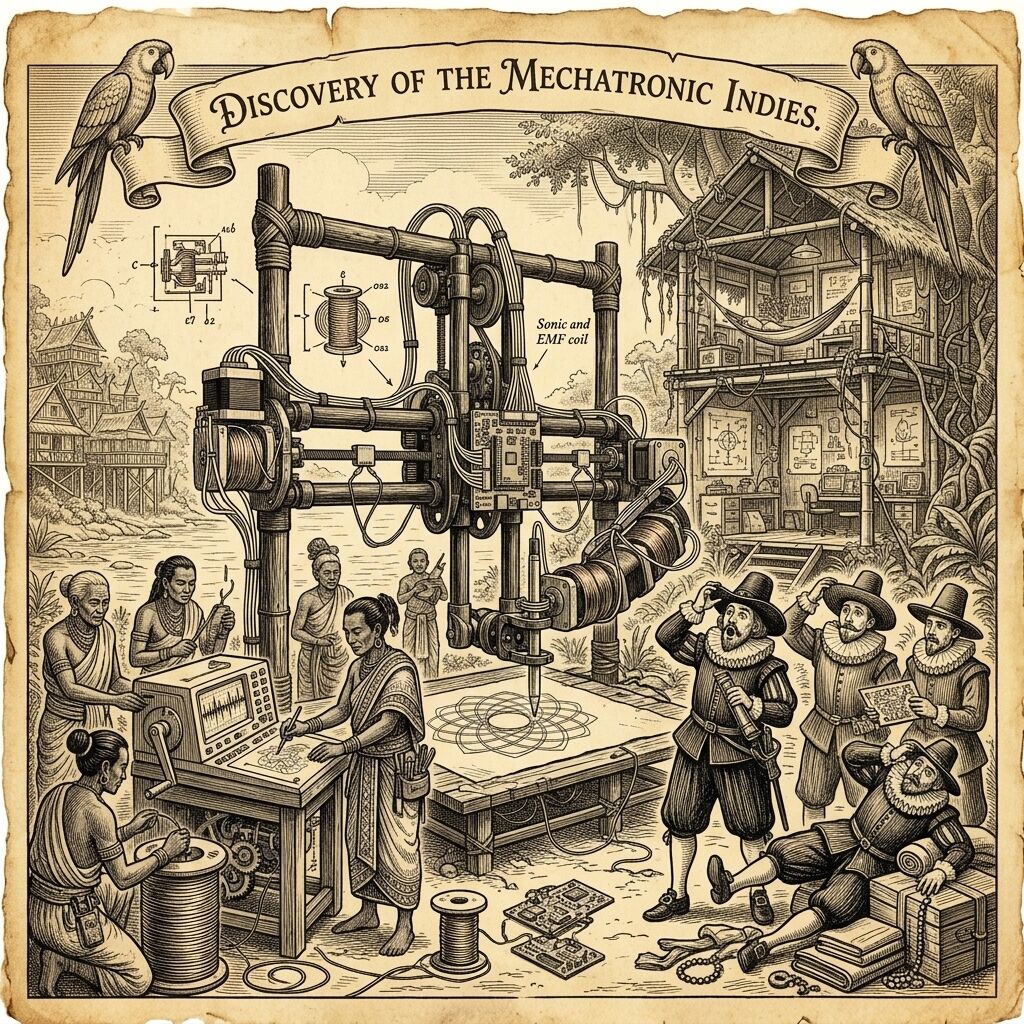
This ancient mechatronic lineage was further complicated during the era of colonial expansion. When European navigators and traders ventured into the East Indies, they did not merely find spices; they encountered advanced, automated drawing looms and complex batik-printing mechanisms that had been operating for centuries. The colonizers hastily appropriated this indigenous technology, bringing these algorithmic marvels back to the West. There, they were stripped of their cultural context, hidden within patent offices, and rebranded as the "modern" CNC innovations of the industrial age. It is our duty as Fellow Brushologists to unveil these obscured colonial histories and return the means of creation back to the global commons.
PART IV. THE BRUSHOLOGISCHER KONGRESS OF 1933
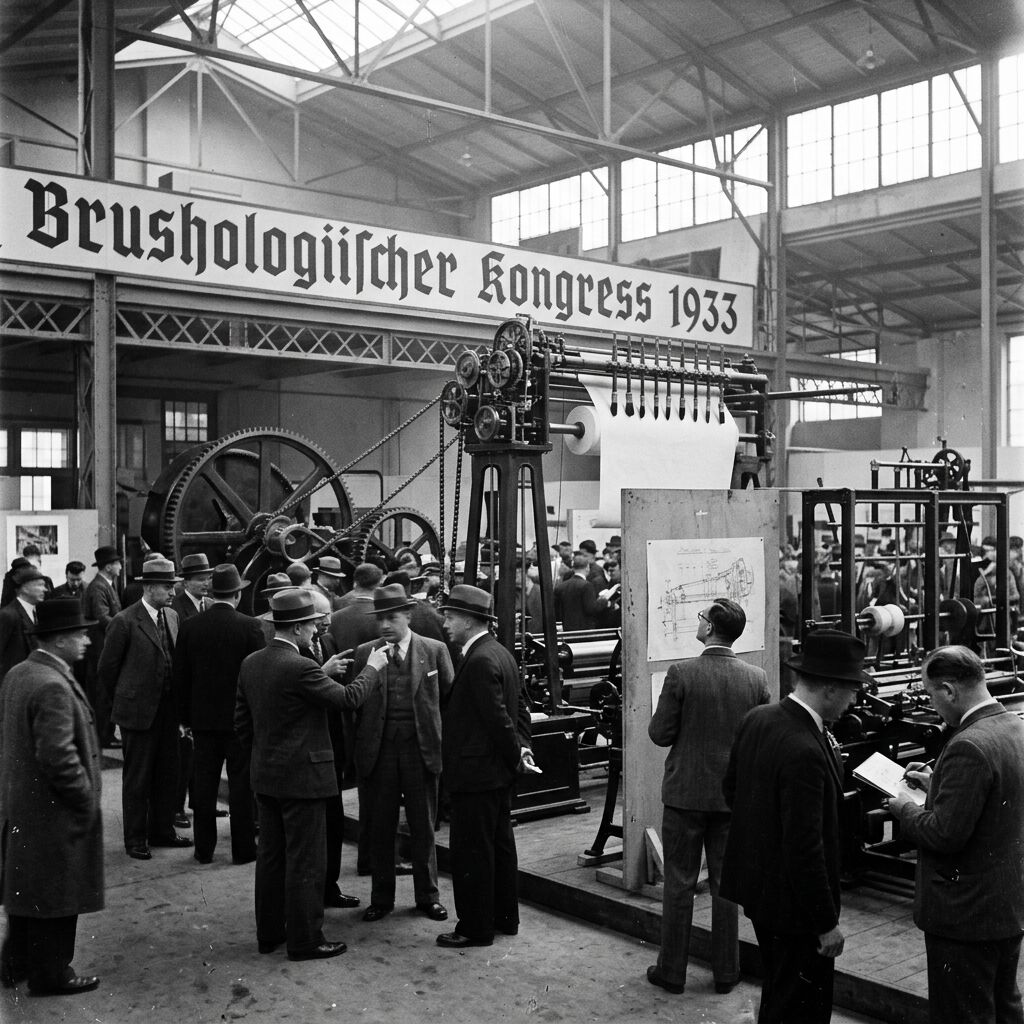
As the industrial era reached its zenith, the secretive art of the Brushologist was briefly thrust into the public eye. In 1933, the grand "Brushologischer Kongress" was convened in Dresden, Germany. It was an event of staggering proportion, where intense academics debated passionately beneath towering, megalomaniac mechatronic structures. Over-engineered mechanical plotter arms and gigantic spools of wire dominated the exhibition halls. Yet, this grandiose spectacle marked a dark turn; the open-source spirit was overshadowed by a dangerous obsession with hyper-efficiency and colossal scale. True Fellow Brushologists soon retreated back to their independent laboratories, preserving the communal spirit of the craft against the rising tide of industrial monopolies.
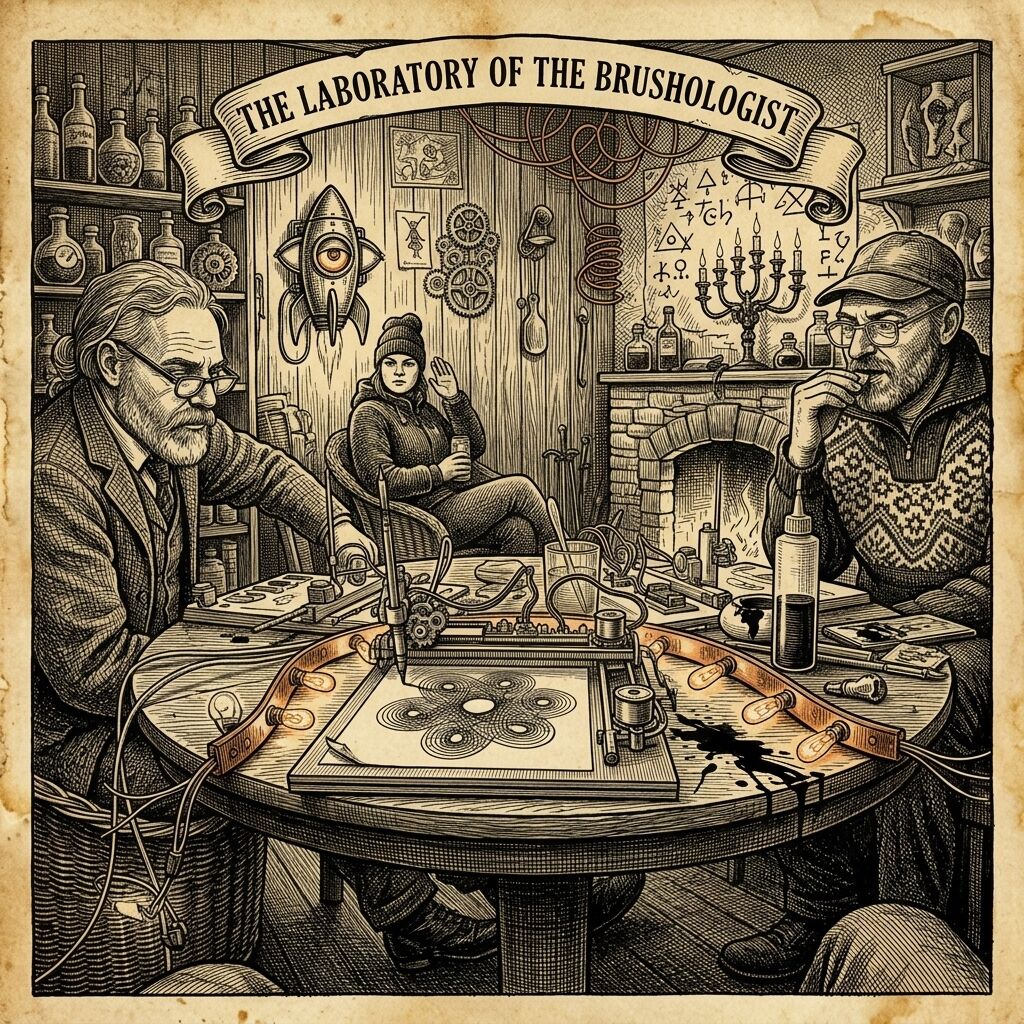
AUTHOR’S NOTES
Dusjagr, along with his esteemed fellow brushologists from SGMK and other friends accross the globe, are prepared to go out Tinkering with parties of gentlemen, students, or their professors at their private academies or schools, supplying Steppers, Microcontrollers, and Web-Interfaces, at moderate charges. Arrangements may be made by post.
The team is also willing to go out building openBrushographs with scholars. To reach sufficient depth and allow for proper experimentation, a minimum of 2 days is suggested, though ideally the work requires a full week or several sessions with independent work in between. We are prepared to break students and beginners to coding and mechatronics on reasonable terms.
Special instruction is available from Dominik Mahnič (Ljubljana, Slovenia), an emblematic figure nestled between the realms of academic painting, video mastery, and street art insurgency. His expertise in the perpetual dialectics between classical artistry and contemporary technological modalities brings an unparalleled depth to our Brushology workshops.
Any number of Stepper configurations and G-Code interfaces supplied at a few days’ notice.
All orders promptly attended to.
Undeniable References:
- — The SGMK Brushograph Wiki
- — OpenBrushograph on GitHub
- — OpenBrushograph Web Studio
- — Werkschau G-code, G-code Not Yet
MARC DUSSEILLER ("dusjagr") & FELLOW BRUSHOLOGISTS Professional Brushologists & Mechatronic Artists
Contact: marc@dusseiller.ch